
Flour Safety 101
Lessons Learned from a Decade of Baking

This content is for informational purposes only and is not intended to be a substitute for professional medical advice, diagnosis, or treatment.
Last week was an important week in my baking career, although I didn’t bake anything at all or even do my weekly Substack posts. (Sorry!) Rather, I spent a day at my local Allergy and Asthma Clinic, and several days after recovering. After a decade of working with flour, I’ve developed a respiratory allergy to flour which has since jumped to multiple environmental allergens. As you can imagine, this is a problem.
It’s still uncertain if I technically have asthma or not; more tests are required before my doctor can clarify the link between my allergies and my lung function. Regardless, I’ll need treatment for my allergies to protect my lungs from repeat triggering. The treatment for this is allergy shots, a procedure and process that lasts up to five years. To prepare my custom shots, last week I underwent multiple rounds of skin prick tests over the course of three hours. The result was some good data, and lots of itchiness. Modern medicine is incredible; it’s also something that’s best avoided through prevention if at all possible.
So, I wanted to spend some time talking about how you can protect yourself when working with flour so you don’t end up like me! Usually, issues such as mine only become a problem for people baking in a commercial setting where they’re exposed to large quantities of flour over a long period of time. However, they certainly can affect home bakers, and it’s important for us all to be aware of the symptoms so we can all stay vigilant.
Just to be clear, environmental allergies are totally different from food allergies. In a bakery, any flour in the air would be considered an environmental allergy which could trigger lung issues, skin issues, and more. Food allergies are an entirely separate issue, and being allergic to breathing in flour does not make a person allergic to eating it or vice versa. Believe me, I’ve asked!
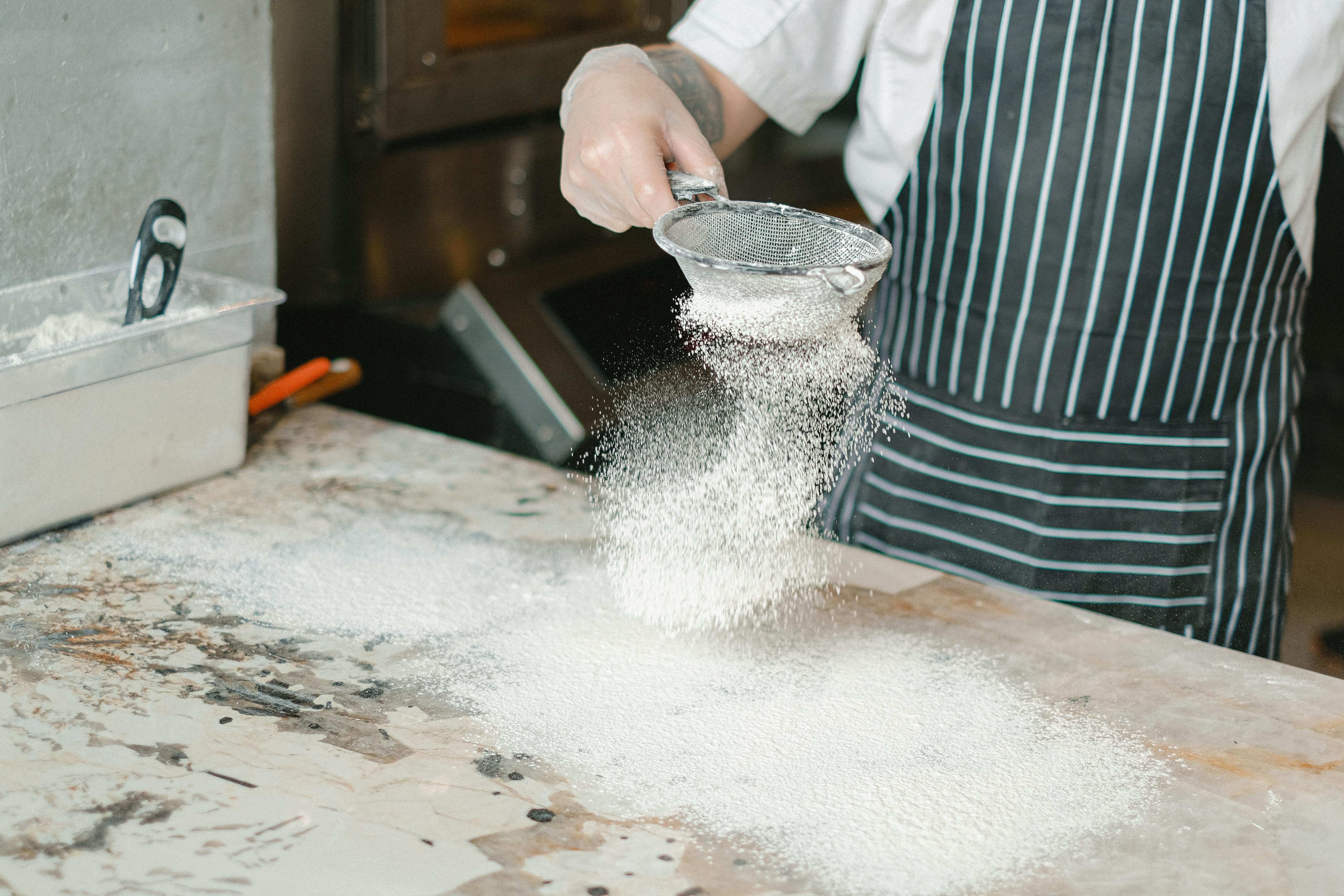
Some of the most common issues I see among my fellow bakers are skin problems, asthmatic symptoms, and general allergy issues. The key to avoiding skin issues is to wash off any flour or dough in cold water before turning the temperature up for normal hand washing. This trick has helped every baker I know with skin issues. It’s also really the only thing someone can do to minimize those sorts of symptoms. Baking is a very hands-on process, and folks with very sensitive skin sometimes need to quit baking for that reason.
Baker’s Asthma is said to be one of the most common occupational respiratory disorders according to the National Institute of Health. It’s no wonder; flour becomes airborne easily and is almost impossible to work with without making a mess. This may sound obvious, but I think it’s something people don’t tend to consider: we should not be inhaling flour.
Asthmatic symptoms can of course be treated with inhalers, but I think needing an inhaler is a sign to pause and consider the long-term effects of baking. Asthma can last a lifetime and is a high price to pay for someone who is just baking for fun or as a short-term career step. Reducing the amount of flour you inhale goes a long way to protect your lungs. I like to use N95 masks, although some people find that looser masks are sufficient. If you’re looking for a really thick and effective mask, Honeywell makes my favorites.
Lastly, general allergy symptoms, such as itchy eyes, can be treated with allergy meds. However, it’s easy to become very dependent on such medicines, so proceed with caution. In the past, bakers struggling with allergies simply had to find a different career. Allergy meds make it possible to keep baking, but they’re not a perfect solution. They do come with side effects, and they carry the risk of dependency. Allergy shots aren’t really formulated to cure environmental flour allergies, and they are a multi-year process, making them not a practical solution for most bakers.
When working with flour, the key is to protect yourself and to learn to spot issues early on. In many aspects of baking, so much is out of our hands. How one person’s body reacts to working with flour is just one more thing that we don’t have control over. It can be very disappointing to have issues working with flour, especially when flour is your passion. But, with a bit of forethought and body awareness, many of us can continue baking safely. I hope that will be true for you too.